
BEHIND THE FLORALS: What Working at Swan Island Dahlias Taught Me About Designing With Flowers at Scale
A firsthand look at what flower selection, mechanics, collaboration, and a complete installation reset revealed about the work behind finished floral design.
A Working Education in Dahlias
I went to Swan Island Dahlias to work, not simply to walk through the fields and take photographs.
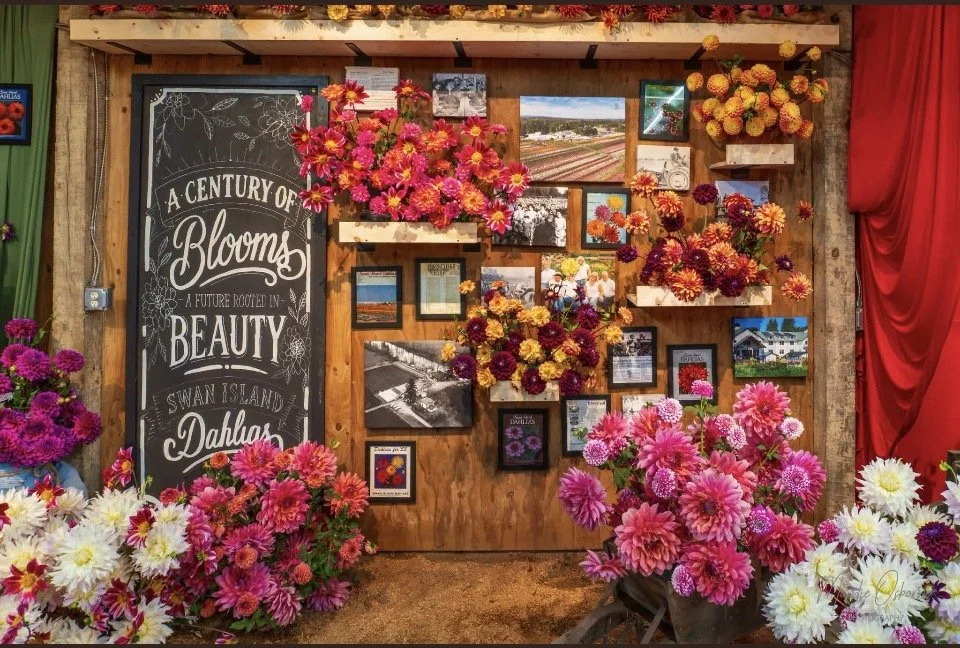
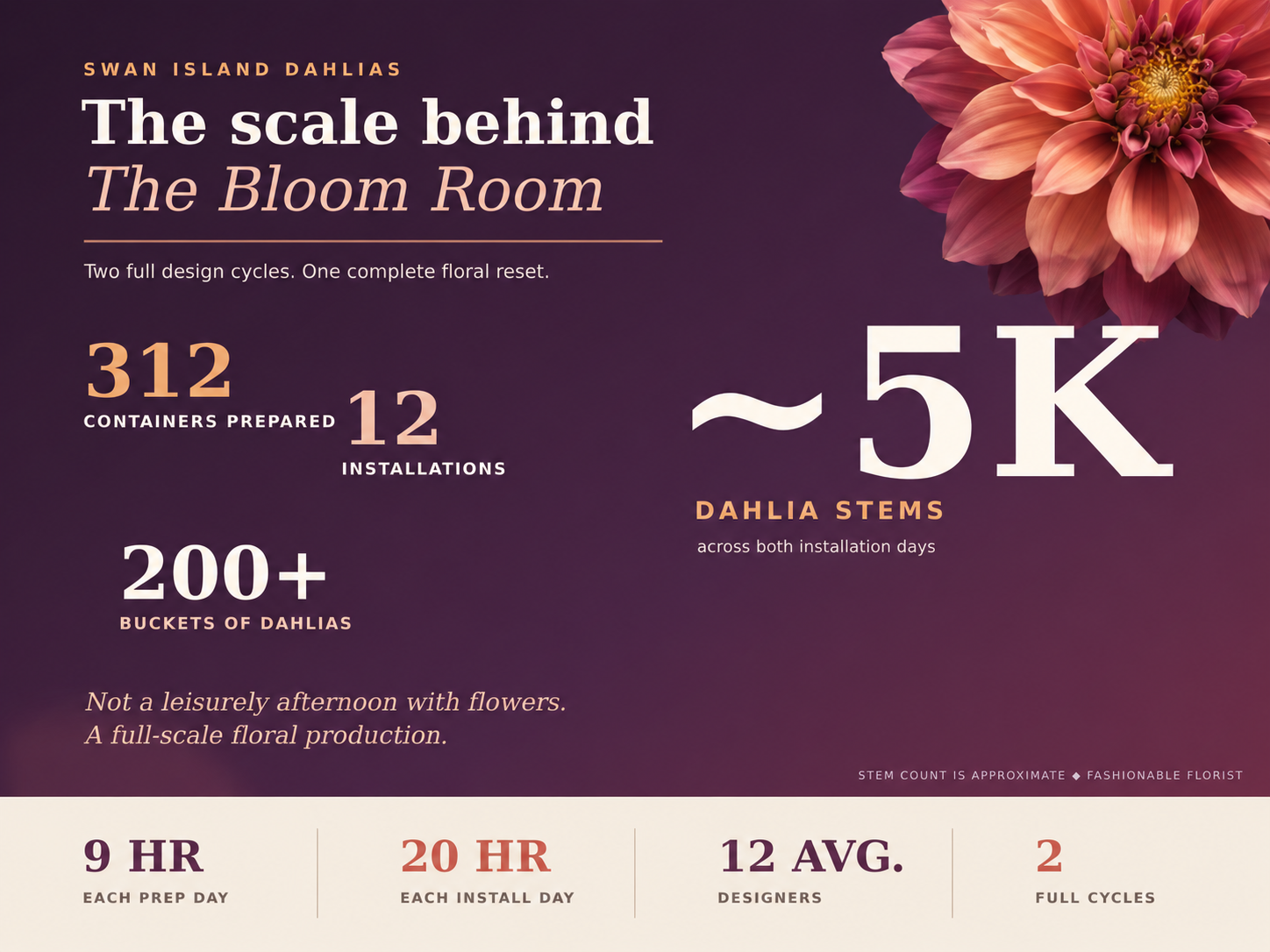
Across two design sessions, I joined the Bloom Room creative team as we worked with fresh dahlias in volume, prepared containers, selected flowers, solved problems, and built installations for visitors to experience during the annual festival.
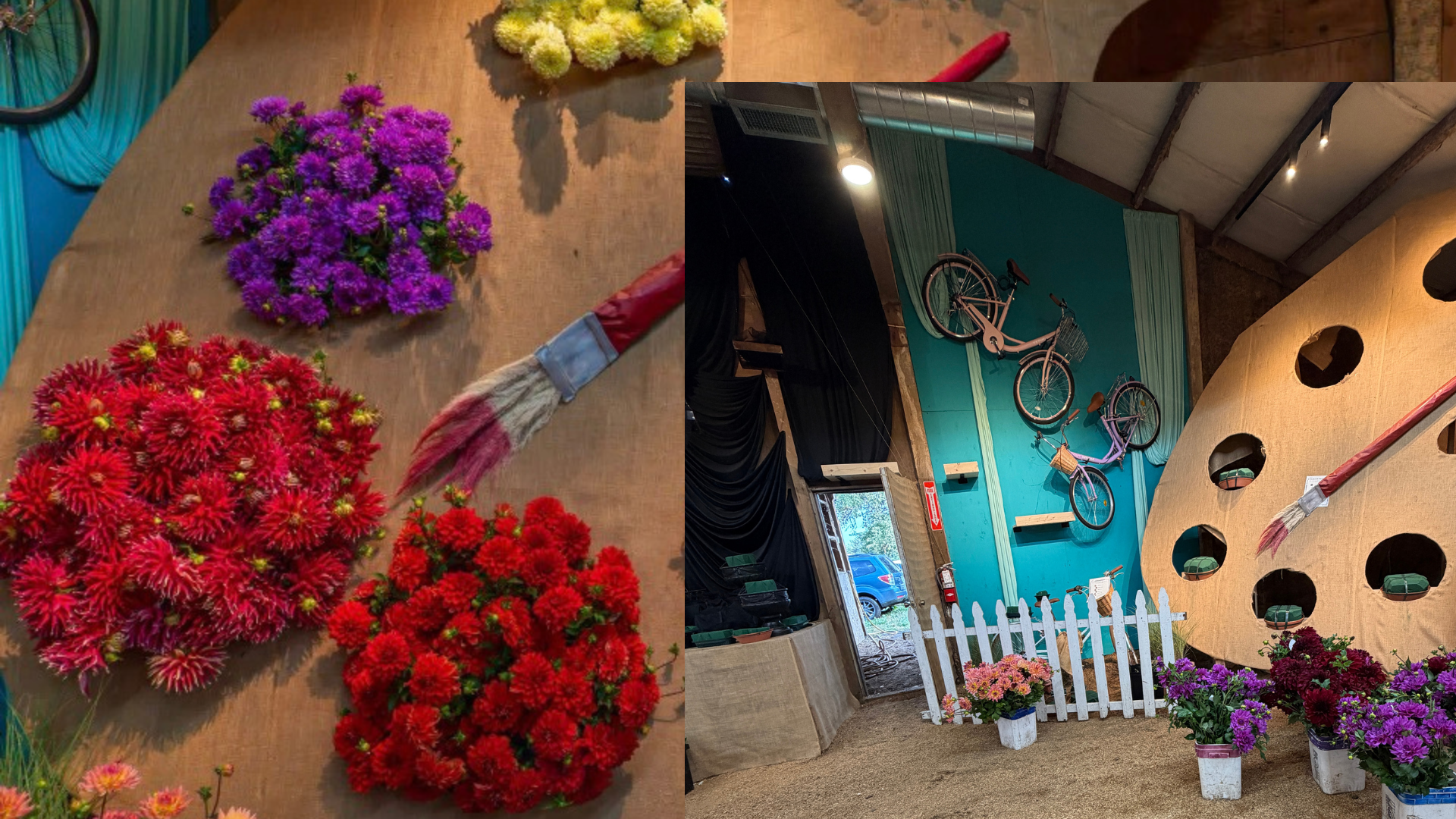
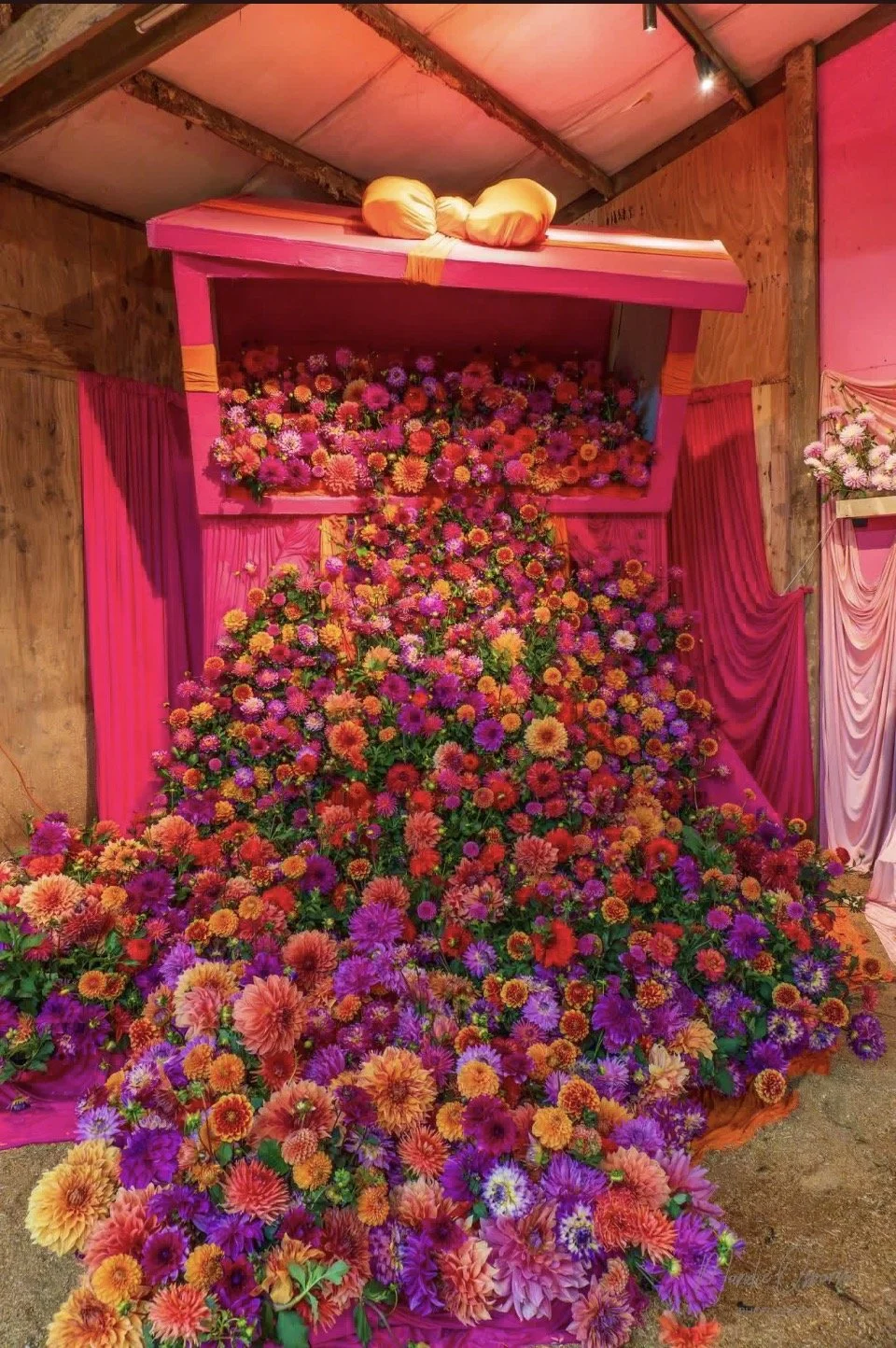
The first session established the designs. The second required a complete reset. We removed the flowers, exposed the mechanics, prepared the containers again, and rebuilt the installations with fresh material. That reset became one of the most useful parts of the experience because it showed what the finished photographs never could. A room full of dahlias is undeniably striking. The more valuable lesson was seeing what had happened underneath the color.
The Reset Revealed the Real Work
When an installation is finished, the eye goes straight to the flowers. During a reset, the design has nowhere to hide. You can see which stems held their position, which mechanics stayed secure, where the balance shifted, and which choices need to change before the next round of flowers goes in. We removed spent material, examined what remained, adjusted mechanics, and rebuilt. Some stems had performed beautifully. Others had softened, shifted, or reached the end of their useful life. The answer was not to repeat every choice exactly. It was to preserve the design language while responding to what the flowers were actually doing.
That is the part people rarely see. Floral design involves constant evaluation. I place a stem, step back, study the line, remove it, change the angle, and look again. At scale, those small decisions accumulate quickly. One misplaced stem may disappear in a bucket, but it can interrupt an entire installation.
Flower Quality Shows Up in the Mechanics
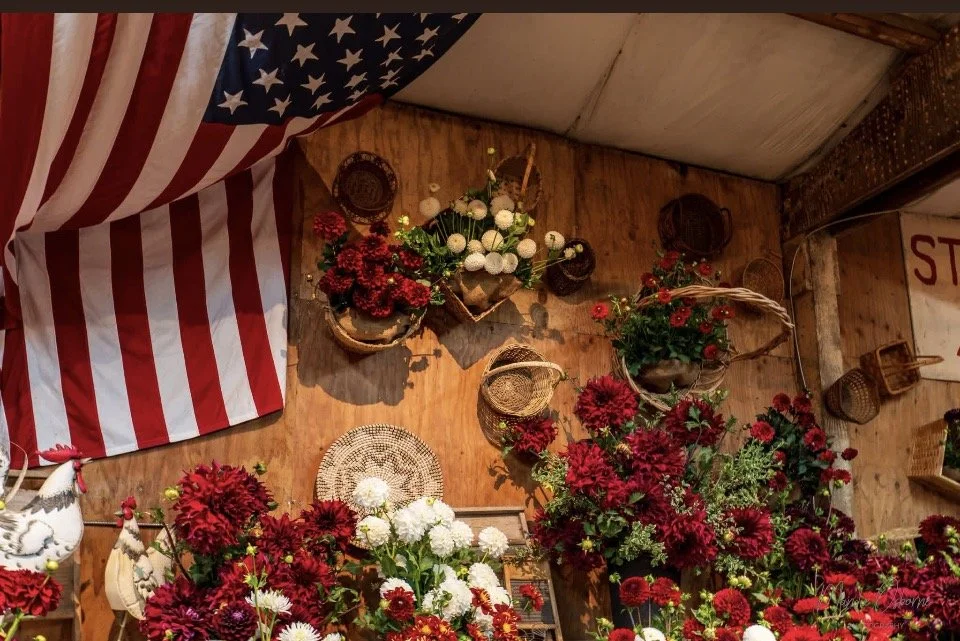
Working with dahlias in this quantity sharpened my attention to the differences between varieties and even between individual stems. Color may catch the eye first, but openness, form, stem strength, direction, and maturity determine where a flower can work.
A strong stem may support a clean outward line. A softer stem may be more successful nestled into the design. A fully open flower can create immediate volume, while a tighter bloom changes how the installation develops. Those are design decisions, but they are also sourcing and production decisions. For a wedding, company celebration, gala, or branded event, the flowers must do more than arrive looking good. They must suit the mechanics, installation schedule, room conditions, and length of the event. Knowing how flowers behave helps me make better choices before production begins.
Scale Changes the Way You Design
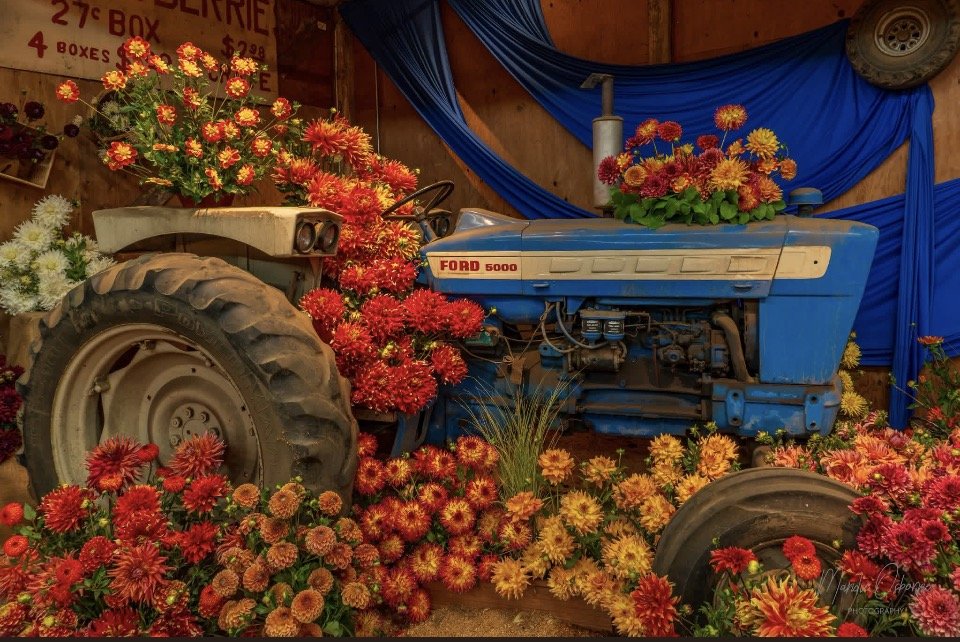
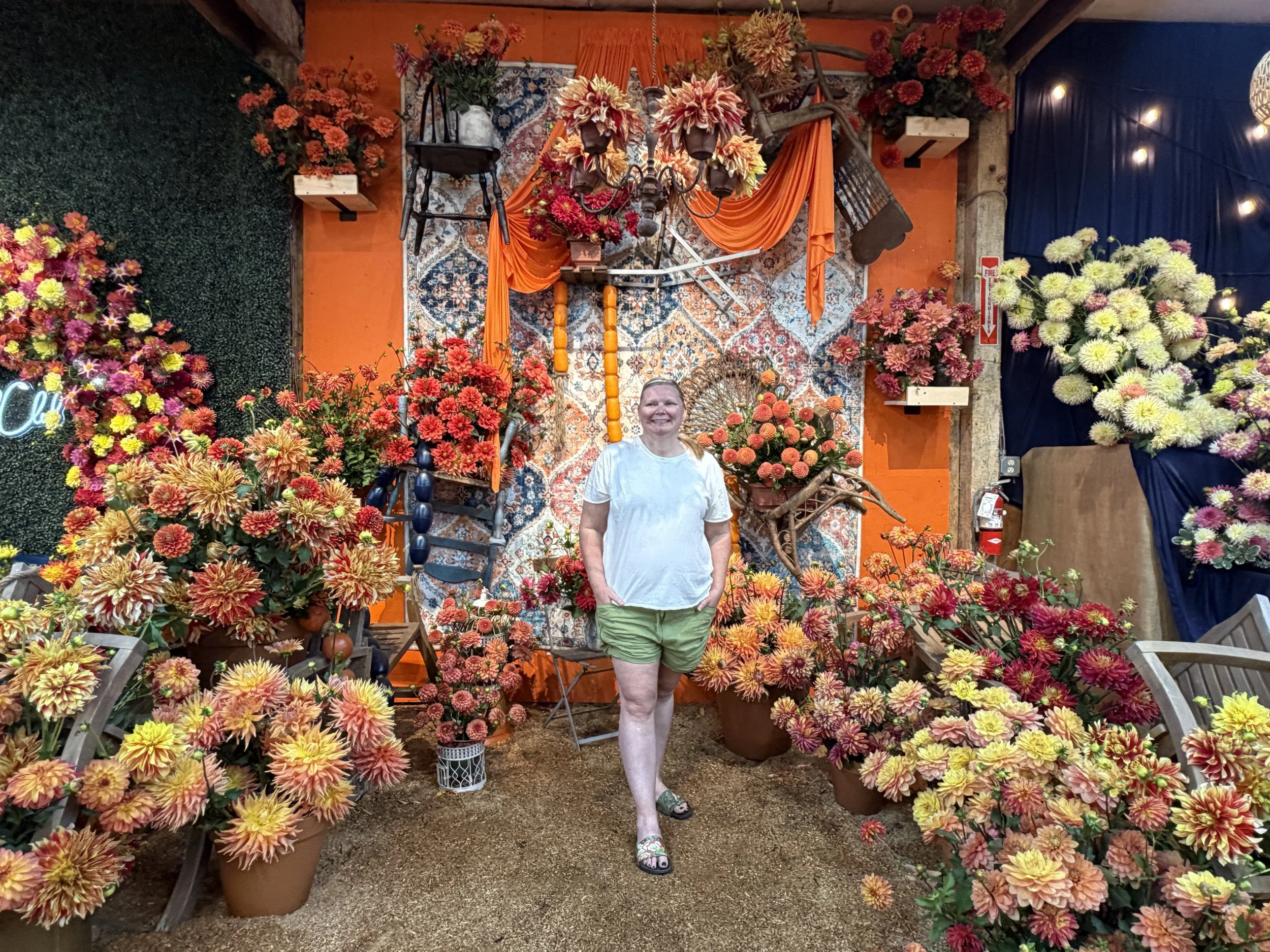
Designing with one bunch of flowers allows you to focus on a single arrangement. Designing with buckets of one flower asks you to think about rhythm, repetition, negative space, and how the eye moves through a larger environment. The Bloom Room installations were built into objects and scenes rather than a row of traditional centerpieces. A tractor, wagons, a bicycle, a cabinet, chairs, carts, and doors became part of the floral composition. Each object had its own shape, but the room still needed to read as one experience. That kind of work is close to the way I approach corporate events and immersive installations. Every area may have a different function, yet the entrance, stage, guest tables, lounge, photo moment, and interactive elements must belong to the same visual world. Scale requires hierarchy. Some moments lead; others support.
If everything shouts, nothing gets the close-up.
Collaboration Requires Editing
Joining another creative team required a different kind of attention. I brought my own design experience, but I was working inside an established environment with a shared goal, a schedule, and other hands contributing to the result. Collaboration works when the finished installation matters more than protecting every individual idea. That means communicating clearly, understanding the existing direction, knowing when to add, and knowing when the design already has enough.
Corporate events operate the same way. Floral design has to work alongside the venue, planner, production team, rentals, lighting, catering, entertainment, and brand requirements. A strong floral partner protects the concept while staying responsive to the room and the people producing it.
What I Brought Back to Fashionable Florist
The Swan Island experience did not send me home wanting to place dahlias into everything. It brought me back to the atelier with a stronger understanding of the flower itself and a renewed respect for the work that happens before a stem reaches an event. I am bringing that knowledge into sourcing conversations, recipe development, mechanics, production planning, and the way I edit a design. It also influences how I lead workshops and interactive floral experiences. When guests work with flowers, the activity should teach them something about the material while still giving them room to create.
Clients see the finished arrangement. My responsibility begins much earlier: understanding the flowers, choosing where they will perform best, and designing a plan that can survive contact with the actual venue, schedule, and installation window. Pretty is expected. Judgment is what protects the design.
Designing With More Than the Photograph in Mind
The most useful creative experiences change how you work after you leave. Swan Island gave me time inside the process, surrounded by an extraordinary quantity of one flower and all the variables that come with it. That perspective now travels with me into ballrooms, chapels, conference spaces, private dining rooms, and the Fashionable Florist atelier in The Woodlands. The finished photograph will always matter. So will every choice that makes the photograph possible.
Frequently Asked Questions
-
I joined the Bloom Room creative team for two design sessions. The work included preparing containers, selecting and placing flowers, troubleshooting mechanics, evaluating the installations, and completing a full floral reset with fresh dahlias.
-
Direct experience with flowers at grower scale improves decisions about seasonality, maturity, stem strength, form, handling, and performance. That knowledge informs floral recipes, mechanics, ordering, and production planning.
-
Yes, when the season, variety, design, and event conditions support them. Dahlias offer exceptional color and form, but each project requires decisions based on availability, handling, mechanics, and the installation timeline, and of course TX heat.
-
Fashionable Florist creates wedding, corporate, and social-event florals throughout Houston, The Woodlands, Conroe, and surrounding areas, with travel considered for select projects.
